Showing posts with label Motorcycle. Show all posts

Yamaha Super Ténéré 1200


A new model in Europe this year, the 2012 Yamaha Super Ténéré adventure motorcycle will be imported into the United States beginning in 2011.                   
Powered by a compact 1199cc parallel twin with a 270° crank intended to enhance torque and traction, as both pistons fire closely together, giving it the feel of a big-bore thumper with less vibration.
The Super Ténéré is Yamaha's answer to such bikes as the BMW R 1200 GS, Triumph Tiger 1050, KTM Super Moto Touring SMT and Ducati Multistrada 1200. "The Super Ténéré is built for adventure," according to a Yamaha spokesman. "Engine mass is kept low for excellent handling. The narrow 2-cylinder inline engine is slim and compact for carving tight lines in twisty mountain roads."
The 2012 Yamaha Super Ténéré features twin downdraft 12-hole injectors with YCC-TTM (Yamaha Chip Controlled Throttle) for optimum throttle control and acceleration, according to Yamaha. These electronic allow the Yamaha to include what it calls the D-Mode (Drive Mode).
It's system that allows the rider to select between two power-delivery maps for customizable throttle-response: T-mode for Touring and general riding, giving a softer response, and S-mode" for Sport riding when the rider wants the most performance possible.
YCC-T fly-by-wire technology is matched to an all-new traction control system, which regulates ignition timing and fuel injection volume based on rear wheel spin. Three modes are available to match rider preference, including off.
The Super Ténéré has both an Antilock Braking System (ABS) and Unified Braking System (UBS). With UBS, squeezing the front brake alone also provides some rear-wheel braking; pressing the rear brake first overrides UBS for traditional separate front and rear braking action.
This new system allows the rider to operate front and rear brakes together by simply pulling the front brake lever, which is especially helpful when riding while standing on the pegs.
The Super Ténéré delivers also offers two-position seat height, adjustable front and rear suspension, and a low-maintenance shaft drive, and more. The wheels are spoked, but they are shod with tubeless tires. There's a multi-function carrier system on back is prepped for luggage and touring accessories.
The compact engine design uses a dry-sump oil supply inside the crankcase, and side-mounted radiator for surprising narrowness, while a two-axis primary balancer smoothes out engine vibration for all-day riding comfort. An 8-valve cylinder head optimizes the fuel charge for spirited performance, and the cylinder head cover is ultra-lightweight magnesium to help centralize mass.
Forged aluminum pistons and carburized connecting rods are designed for durability and performance. There's a 6-speed transmission to cover the range from dirt roads to unencumbered interstates. The 6-gallon fuel tank allows for long excursions between motorcycling fueling stops.
The 2012 Super Ténéré's new all-new steel frame is designed to reduce rider fatigue during long rides. It utilizes a steel main frame, which is claimed to offer the best balance of strength and flexibility. The engine is a stressed member of the frame and by locating the crankshaft low and close the footpegs, Yamaha says the motorcycle has "a remarkably light feel, even off road."
Adjustable pre-load suspension allows the rider to adjust the Super Ténéré for varying loads or a passenger. The forks are adjustable for compression and rebound damping, while the rear shock is rebound-damping adjustable only.
The Super Ténéré comes equipped with an adjustable seat height. A full inch of adjustment provides a low height for shorter riders or a roomier riding position for taller riders in the high position. While the rider is seated, rubber cushions in the footpegs provide a comfortable perch.
When the rider stands to tackle more technical motorcycle riding conditions, the rubber compresses, letting the rider's boots contact the metal footpeg surface. Handlebar brush guards are standard equipment. Both side stand and center stand are provided for complete parking convenience.
The luggage system design has three possible set-ups: standard with no top case/side bags, top case installed, and side cases installed. Genuine Yamaha top case and side cases designed for adventure touring are available as accessories. These accessories were included during the design of the motorcycle so as to enhance the look of the motorcycle.
The 2012 Yamaha Super Ténéré will be available in May 2011, with dealers taking deposits on the $13,900 bike beginning in September 2010. The bike is available in your choice of Raven Black or Impact Blue.
Motorcycle Specs | 2012 Yamaha Super Ténéré XTZ12BB; XTZ12BL
Engine Type...1199cc, liquid-cooled, 4-stroke 2-cylinder DOHC
Bore x stroke...98.0 x 79.5mm
Compression ratio...11.0:1
Fuel delivery...Fuel Injection with YCC-T
Ignition...TCI: Transistor Controlled Ignition
Transmission...Constant mesh, 6-speed
Final...Shaft
Front suspension/front...Telescopic fork, 43mm tube, adjustable preload, compression and rebound damping, 7.5" travel
Rear suspension...Monoshock, adjustable preload and rebound damping, 7.5" of travel
Front brakes... Dual 310mm hydraulic disc, ABS/Unified Brake System
Rear brake...282mm single disc
Front tire...110/80R 19M/C
Rear tire...150/70R 17M/C
L x W x H...88.6" x 38.6" x 55.5"
Adjustable seat heights...33.26" or 34.25"
Wheelbase...60.6"
Rake...28.0°
Trail...4.9"
Fuel capacity 6.0 gallons
Wet weight...575 pounds
Colors...Raven; Blue

Read more...

[Review] 2011 Ducati 848 EVO ( photo + video )

Ducati’s middleweight superbike gets a significant upgrade for 2011, further separating itself from the confines of established sportbike categories.


It’s already 17 years since the first small-bore Ducati 4-valve superbike, the 748, broke cover – the same year as the iconic 916, in 1994. The 748 played a background second fiddle to the beloved 916 series until the 749 emerged in 2003. A close relation to the aesthetically challenged 999, the 749 continued to be a relatively low-cost entre into Ducati’s superbike family and competed against the Japanese 600s in supersport competition.
Then MY2008 saw a paradigm shift for the sub-liter Ducati superbikes, with the new 848 getting 15 extra horses and a weight loss of nearly 50 lbs! However, its 101cc displacement bump (to 849cc) made it ineligible for supersport competition, leaving it adrift in a class of its own.


The 2011 Ducati 848 EVO. Now in three fun flavors!
Perhaps that’s a good thing. Instead of being considered an expensive alternative to the Japanese four-cylinders, the 848 ruled over them with not only more torque, of course, but also more horsepower. Our ’08 test bike cranked out 116 ponies at the rear wheel, which is nearly on par with what a 999 or Honda RC51 could do a few years ago when liter-sized superbikes were the hot ticket.


Well, Ducati has upped the ante again with the 848 EVO, bringing along extra horsepower, improved brakes and fitment of a standard steering damper – all for the same price as last year’s 848s.
To demonstrate the EVO’s newfound prowess, Ducati invited us to the historic Autodromo Enzo e Dino Ferrari in the town of Imola, Italy.
It’s within the engine that most of the EVO’s updates are found. The 848’s powerplant remains structurally unchanged, but a multitude of revisions to improve performance creates what Ducati says is “the highest power-per-liter of any twin-cylinder engine in production.”
At the intake side, the fuel-injection’s throttle body size jumps from 56mm to 60mm and feeds fuel into optimized intake ports. New cams offer increased valve lift on both the intake and exhaust sides. A revised combustion chamber and new pistons bump the compression ratio from 12.1 to a high 13.2:1. The 90-degree V-Twin’s rev ceiling has been lifted 500 revs to 11,300 rpm, and heat generated from the extra revs is dissipated by new ventilated timing belt covers.


There’s about 120 horses being spat out the rear wheel of the 848 EVO.

Ducati showed us a dyno graph comparing old and new engines, and the EVO’s has an advantage starting at 8500 rpm, with a bigger jump after 9.5K when it romps to a 6-horse surplus. Crankshaft horsepower is alleged to be 140 at 10,500 rpm. We’ll guess rear-wheel ponies will nudge past the 120-hp mark.
Positive impressions begin at start-up, as the 848’s exhaust note sounds deliciously rambunctious. They’re actually a little too boisterous for the EPA – USA bikes will be slightly quieter thanks to mufflers almost 2 inches longer.
Heading out onto the Imola racetrack, the EVO feels almost identical to the 848. Its wet clutch isn’t grabby like some of Ducati’s dry clutch packs, and low-to-midrange power easily dwarfs any sub-liter four-cylinder. Claimed dry weight remains constant at 370 lbs, so its fully fueled curb weight will come in at about 425 lbs.


World Superbike title contender Carlos Checa tries to keep up with Duke.
The EVO responds with enthusiasm when dialing on the power with an open track ahead, revving with an urgency above 9000 rpm the old bike lacked. It pulls so well up top that a rider needs to be conscious of the shift lights to engage the next gear before the rev limiter kicks in. With shifts timed accurately, the EVO is fully capable of cutting fast laps – quicker on many tracks than the 600s.

GP Speed


Carlos Checa is a winner in Grand Prix and World Superbike competition. And in making Duke pee in his leathers.

The Autodromo Enzo e Dino Ferrari nestled within the town of Imola has a rich and storied legacy, and it holds many secrets of speed until a rider can milk his best out of the Italian circuito. I learned that the blind left-hander Piratella is much faster than expected, and that the first part of the downhill Aqua Minerale requires only a short stab at the brakes.
I had one other eye-opening speed lesson as I headed up Imola’s front straight for the last time of the day. With the 848 rubbing its redline in fifth gear, I grabbed a handful of brakes as the Tamburello chicane loomed closer. Then, with a shock that took my breath away, a rider flashed past on my left with at least 30 mph extra. “Oh, god,” I thought, “Someone’s lost his brakes and is going to pile in a huge way into the same area in which F1 legend Ayrton Senna lost his life.”
Then, before I could inhale, I recognized the seemingly doomed rider was none other than World Superbike race winner Carlos Checa on an 1198 – it wasn’t the first time he’d passed me. Because Checa’s one of the world’s finest riders, I knew he could handle Taburello easy enough. I relaxed momentarily.
But at the same instant I was again floored by what I was seeing. Not only was the amiable Spaniard going faster and deeper into Tamburello than I’d imagined possible, he also decided to do it with flair right in front of my disbelieving eyes. My jaw dropped as Checa pitched it sideways on the brakes, leaving a black stripe of rubber from his rear tire for about 50 yards before gathering it up in time for the fast-approaching corner.

I'm not worthy. –KD
Brembo’s one-piece monobloc calipers are a worthwhile upgrade for the racetrack-bred 848.

But engine tuning, like life, is a compromise. We’re stoked to have a more power at high revs, and response from the 60mm oval throttle bodies is rewardingly seamless, but the EVO seems to have lost a bit of midrange grunt compared to the Gen-1 848. Tellingly, the EVO’s torque peak is at 9750 rpm, about 1200 revs higher than we measured on our previous test bike. Strident power only arrives once past 7000 rpm, giving the EVO a respectable 4300-rpm play zone.
Other than the plentiful engine mods, the EVO’s most significant upgrade revealed itself when barreling downhill with a full head of steam into the Rivazza twin left-handers, one of the most intense braking zones on the Imola circuit.
The 848’s new Brembo monobloc brake calipers deliver a more solid feel than the previous two-piece calipers even though they’re clamping on the same 320mm dual discs. Ducati claims 20% greater deceleration at the same lever pressure. Fluid continues to be delivered by a radial-pump master cylinder via coated, braided stainless-steel lines, delivering stellar feel. The old bike’s brakes were easily better than average, and these new binders step up the game to excellent status.
Making the 848 even more track-worthy is the addition of a steering damper sourced from the 1198. The non-adjustable unit is cross-mounted atop the upper triple clamp, and it provides some assurance the EVO wouldn’t get squirrelly even if its rider does. 
Not that we had much complaint about the 848’s handling without a damper. The EVO continues the platform’s fine handling qualities, exhibiting a fairly light turn-in at low speeds, becoming more deliberate as speeds rise. It’s a solid, predictable chassis with terrific mid-corner stability.


The 848 EVO loves being leaned over in the corners.
The final new bits on the EVO are the terrific Pirelli Supercorsa SP tires we’ve enjoyed as OE-fitment on some premium sportbikes. While the SPs are better suited for road use, we were spoiled with sticky race-compound Supercorsas (no SP, which are rated for higher speeds) developed in World Supersport competition. We ran out of nerve before they ran out of grip.
A few laps on Ducati’s new 1198SP pointed to a couple of components that would also be beneficial on its little brother. The SP’s new slipper clutch would be a nice addition for track work on the 848, as would the Ducati Quick Shifter that’s now standard on the 1198 series. The 848’s gearbox didn’t always cooperate during clutchless upshifts.

A narrow midsection and a cooperative chassis make for a delightful dance partner.

Aside from new paint color options, the 848 is stylistically unchanged in its EVO guise. For many bikes, this would be a problem. For the 848, its status-quo stance keeps it among the belles of the ball, especially in the new Arctic White Silk seen in these photos, a tasty matte-white pearl with red frame and wheels. Bella!
Our time aboard the EVO at Imola reaffirmed the 848’s sporting credentials, nicely upgraded for 2011 with tweaks that will help it get around a racetrack even quicker than before. It’s an upper-echelon sporting tool that can dust off a Ducati 999 if need be – or nearly anything else on a medium-speed racetrack.
Perhaps it doesn’t matter if the 848 is a bike without direct competition. It’s a strong seller for Ducati, with some 80% of buyers new to the Ducati fold, most coming from Japanese 600s. And along with Monster 696 riders, the 848 shares the distinction of having the youngest buyers among the Ducatisti.

With middleweight sportbikes from Asia pushing the $11,000 mark, it doesn’t seem like that much of a stretch to pony up another grand or so to park a Dark Stealth (matte black) 848 EVO at its $12,995 MSRP. That’s less than asked for the 749 back in 2003! The white or red EVO’s list for $1000 extra.
So, can a $13,000 Italian sportbike be a value proposition? We think so.


Video 2011 DUCATI 848 EVO Motorcycle Overview 


Read more...

2011 BMW Scooter Concept C ( Pictures + Video )

BMW has just released photos and details with the BMW Concept C Scooter, which is a big scooter that will serve as platform for two new premium scooters with internal combustion engines scheduled to make it into production in the future.


2011 BMW Scooter Concept C official video 

 video by youtube

The BMW Concept C Scooter is being showcased at the EICMA in Milan these days, and in terms of design some of the lines that will make it recognisable include the 'split face', the high rear section and the close cut, speeder-style windscreen.

The BMW Concept C Scooter uses a powerful two cylinder engine combined with a continuously variable transmission, and some of its highlights include the black chromium suspension, the short and sporty muffler or the front-wheel control that looks like an upside down fork.

The BMW Concept C Scooter is also fitted with a dual twin brake disc at the front, with two radial callipers, and a single brake disc at the rear, ABS, and LED headlamp plus three LCD displays in the cockpit.
BMW press release :
Munich. Recent years have seen radical changes in the world ofindividual mobility, specifically in the conurbations, and the numberof registrations has rocketed for virtually all individual transportconcepts. However, the space available to traffic has not grown to thesame extent, so individual mobility must come to terms with the new circumstances.

Against this background, BMW Motorrad will be expanding its presentmotorcycle adventure world to

include the big scooter. This newproduct segment will first give rise to two innovative premiumscooters with internal combustion engines. The differingcharacteristics of this concept will appeal to a broad target group.In addition, some thought is being given to a future alternative drivewith electric motor.
BMW Motorrad will be combining in these scooters the outstandinghandling of the motorcycle with the particular agility and conceptualcomfort of the scooter for the maximum experience of dynamic riding– a big scooter made by
BMW Motorrad. There are plans tomanufacture these future production vehicles at the BMW Motorrad plantin Berlin.

BMW Motorrad is continuing its strategy of strong and sustainablegrowth and so will be intensifying its traditional work in the enduro,touring, and sport touring fields. Following its successful entry tothe super sport segment, BMW Motorrad will now be expanding its rangeyet again to include a highly promising business line.
This path leads straight to the big scooter segment. These highdisplacement vehicles with dynamic handling characteristics havegained considerable popularity all over the world. Moreover, theypresent an interesting alternative to returnees who up to now wereundecided about motorcycles after long periods of abstinence.
BMW Concept C. New dimension in the field of big scooters.
New ideas and concepts on the subject of two-wheeled mobility are adecades old tradition at BMW Motorrad. Countless times, conceptstudies and drafts have been presented that reflect the power ofinnovation and future orientation of BMW Motorrad.
With its Concept C study, BMW Motorrad is yet again embarking on anew path and demonstrating a fascinating mobility option for thefuture. Here, C stands for “commuter”. Particularly inview of the traffic development in urban areas, it presents theprospect of an innovative, sporty big scooter for the future premium segment.
As usual at BMW Motorrad, there is more to this study than just anattempt to present a big scooter for the highest demands. Rather, thedesigners and engineers of BMW Motorrad focused above all on theemotive component in addition to the technical function and quality– and the thrill from the very first moment on.
BMW Concept C. Emotion, dynamic handling, and function in the design.
When unveiling its Concept C at EICMA in Milan, BMW Motorrad will bedirecting the maximum possible emotion to its interpretation of thissubject, which will bear witness to the primary claims of maximum, allround functionality.
Concept C as a vision of the big scooter is immediately recognisableas a member of the BMW Motorrad family. For instance, it also presentsthe so-called “split face”, a visual tripartite of dynamicresponse extending from the front silhouette to the front wheel coverand beyond. In the style of highly sporty
BMW Motorrad models,such as the S 1000 RR, Concept C also features a twin-tipped front spoiler.
Unlike the L shaped side view presented up to now by big scooters,with their predominantly vertical body lines and colour scheme,Concept C has ventured on a new, much more sporty and dynamic path.The body lines sweeping up to the vehicle’s rear underscore thisbig scooter’s active riding character. The high rear sectionemphasises the lightness and agility of Concept C's powerfultwo-cylinder engine. Sportiness and dynamism are also underscored bythe close cut, speeder-style windscreen.
The functional side of this scooter is expressed in stylish designelements, such as the aluminium look of the bash plates with the airintake adopted from the BMW GS.
The black chromium of the suspension and frame parts form athrilling, dynamic relationship with the aluminium chromium, silver,and blue paintwork of the body parts. In addition, the black satinsections present a high-contrast emphasis on the vehicle’scentral area. This highly technical and high-quality elegance is bornefurther by finely worked details, such as the fuel tank coverreminiscent of aircraft and the short, sporty muffler. The visionaryfacet of Concept C is presented by the tyres with flanks and treads of blue.
BMW Concept C. Pioneering technology that fuels enthusiasm.
Concept C presents unusual and innovative solutions that offer a wideprospect of what in future can become reality in this segment.
For instance, Concept C features a highly complex monolever mechanismwith hollowed-out shaft connected to a suspension strut visible fromthe outside. In this study, front-wheel control takes the form of anupside down fork.
The stable twin disc brake at the front features two radial brakecallipers that also underscore the dynamic sportiness of Concept C. Inaddition, the single disc brake at the rear and the BMW Motorrad ABSprovide the maximum possible safety during braking manoeuvres.
The dynamic and equally comfortable driving force behind Concept C isprovided by a new, two-cylinder inline engine in conjunction with CVT(continuously variable transmission). Engine power, torque, andtherefore performance will be moving towards the top of the segment.

Light is cast on a more distant point in the future by the LEDheadlamp integrated into the face panelling. This future vision isalso continued by the deliberate absence of conventional rear viewmirrors, which will be replaced in Concept C with two video cameras inthe rear. These record the area behind the vehicle and transfer theimages to two LCD monitors in the cockpit within view of the rider.The road speed, engine speed, and other data appear on a third LCDdisplay integrated at the centre of the cockpit.

BMW Concept C. Perfected rider equipment and stowage space concept.
Concept C also testifies to thoughts and ideas extending beyond theactual vehicle. In line with the BMW Motorrad philosophy, a bigscooter realised in the Concept C style will also come with a range ofadequate rider equipment. In the best BMW Motorrad tradition, thedevelopment of a big scooter will also include a suitable stowagespace concept.

Read more...

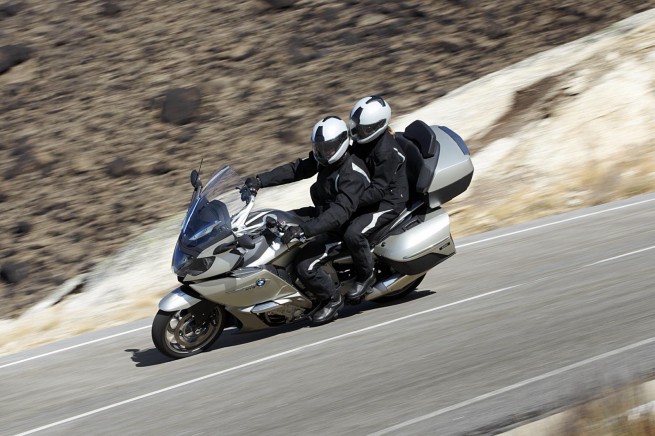
BMW K1600GT And BMW K1600GTL World Premiere

After much anticipation and hype in the preceding weeks, BMW has finally released official photos of their new flagship touring machines, the K1600 series bikes.


A few of the highlights at a glance:

    * Supreme in-line 6-cylinder engine with a high level of pulling power, especially in the lower and medium engine speed range.
    * Engine output 118 kW (160 bhp) at 7 750 rpm and maximum torque 175 Nm at 5 250 rpm.
    * Over 70 per cent of the maximum torque is already available from 1 500 rpm.
    * The lightest and most compact 6-cylinder in-line engine in serial motorcycle production > 1000 cc weighing just 102.6 kg and measuring 555 mm in width

BMW K 1600 GTL (10/2010)

Read more...

My Ping in TotalPing.com

Sexy Nude Celebrity Hot Female Celebrity